Governments of Canada and Northwest Territories accept the nomination of the Dehcho / Deho / Kuukpak / Nagwichoonjik / Grand Rivière / Fleuve Mackenzie / Mackenzie River in the Northwest Territories as a Canadian Heritage River
Canada NewsWire
OTTAWA, ON, Oct. 8, 2026
OTTAWA, ON, Oct. 8, 2026 /CNW/ -- Heritage rivers reflect the deep cultural connections between waterways, landscapes, wildlife and the people who have lived, travelled and thrived along them for generations.
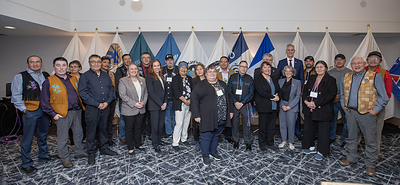
At a gathering of the Northwest Territories Council of Leaders in Ottawa on Monday, the Honourable Julie Dabrusin, Minister of the Environment, Climate Change and Nature and Minister responsible for Parks Canada, the Honourable Jay Macdonald, Northwest Territories Minister of Environment and Climate Change, and the Honourable Caitlin Cleveland, Northwest Territories Minister of Education, Culture and Employment, announced the nomination of the Dehcho / Deho / Kuukpak / Nagwichoonjik / Grand Rivière / Fleuve Mackenzie / Mackenzie River to the Canadian Heritage Rivers System.
The nominated section includes the entirety of the River's main stem, which is one of the longest in Canada. This River's main stem, located fully within the Northwest Territories, flows just under 1,800 km from its origin at the western tip of Great Slave Lake, through the Sahtú and Gwich'in settlement areas, to its terminus at the Arctic Ocean in the Inuvialuit Settlement Region. Including its tributaries, the River expands over 4,200 km in length. Its significance is reflected in its names in the Indigenous languages and dialects that are spoken along its length. The English interpretation of each of these names–Dehcho/Deho/ Grand Rivière/Kuukpak/Nagwichoonjik/Fleuve Mackenzie –is simply "Big River." It is a living Indigenous cultural landscape. The stories, knowledge, and traditions of the Dene, Métis, Gwich'in, and Inuvialuit peoples are reflected in the river's oral histories, sacred places, harvesting practices, and longstanding connections to the land and water.
The nomination of the Dehcho / Deho / Kuukpak / Nagwichoonjik / Grand Rivière / Fleuve Mackenzie / Mackenzie River is a milestone, recognizing the River's cultural importance as well as the part it has played in the shaping of Canada. This River was, and remains, a major trade and transportation route. The nomination also acknowledges the River's exceptional recreational opportunities and ecological richness.
Draining nearly one-fifth of Canada's landmass, the River supports diverse ecosystems, internationally significant wildlife habitat, and remarkable geological features, including the Mackenzie Delta. The River is home to a significant number of species of flora and fauna who call the river and its shores home. It provides critical habitat to many species of mammals, fish, birds, plants and other organisms, and is especially significant for migratory birds.
This nomination is the result of collaboration between Indigenous governments and Indigenous organizations along the River, the Government of the Northwest Territories and Parks Canada. If designated, it would join an established network of Canadian Heritage Rivers that celebrates the country's diverse history and connections to freshwater heritage.
The next step of the designation process is a stewardship plan, prepared within three years of the nomination, that builds a shared vision and strategic direction for stewardship and care of the River. As the party that advanced the nomination, the Government of Northwest Territories is responsible for leading the development of the stewardship plan. The plan will be created in collaboration with the Dene, Métis and Inuvialuit Peoples and communities throughout the Dehcho and Sahtú, Gwich'in and Inuvialuit regions. Should the plan be approved, the River will have official designation and join the Canadian Heritage Rivers System.
Quotes
"The Dehcho / Deho / Kuukpak / Nagwichoonjik / Grand Rivière / Fleuve Mackenzie / Mackenzie River is a lifeline for the Northwest Territories, sustaining diverse ecosystems and wildlife from Great Slave Lake to the Arctic Ocean. This nomination is an opportunity to recognize the River's extraordinary natural heritage and reinforce our commitment to protecting the waters, habitats, and biodiversity that make this landscape so unique."
The Honourable Julie Dabrusin
Minister of the Environment, Climate Change and Nature
"The Dehcho / Deho / Kuukpak / Nagwichoonjik / Grand Rivière / Fleuve Mackenzie / Mackenzie River is much more than a waterway. It is a vital part of the history, culture, and identity of the Dene, Métis, and Inuvialuit Peoples who live along its banks. This nomination recognises the deep and enduring connections that exist between these communities and the lands and waters of the Northwest Territories, and the importance of carrying those connections forward into the future."
The Honourable Rebecca Alty
Minister of Crown-Indigenous Relations and Member of Parliament for the Northwest Territories
"In the Northwest Territories, rivers are our lifeblood. The Dehcho / Deho / Kuukpak / Nagwichoonjik / Grand Rivière / Fleuve Mackenzie / Mackenzie River is one of our most vital. For generations, it has provided for us. The nomination to the Canadian Heritage Rivers System is a significant step toward ensuring its importance and continued protection, so that it can remain a source of life, connection and vitality for future generations."
The Honourable Jay MacDonald
Northwest Territories Minister of the Environment and Climate Change
"Waterways in the Northwest Territories are a vessel of our cultures. For thousands of years, the Dehcho / Deho / Kuukpak / Nagwichoonjik / Grand Rivière / Fleuve Mackenzie / Mackenzie River has provided for the people who live here. The nomination to the Canadian Heritage Rivers System recognizes the River's significance to the territory and the country and is an important milestone towards preserving the cultural legacy of the River for years to come."
The Honourable Caitlin Cleveland
Northwest Territories Minister of Education, Culture and Employment
"For the Métis people of Fort Providence, our extended families and Métis descendants beyond our region, the Dehcho—the Big River, which we call 'la Grande Rivière' in our Michif dialect—is part of our history, culture and everyday lives. This nomination recognizes the connection our people have maintained with the river through generations of travel, harvesting and shared knowledge. As the stewardship plan takes shape, Métis voices and the knowledge of our Elders must help guide the care of the river for future generations."
President Albert J. Lafferty
Fort Providence Métis Nation
"Kuukpak is central to many Inuvialuit and their identity, culture and way of life - 365 days a year. The Inuvialuit Final Agreement affirms our responsibility to protect the lands and waters that have sustained us for generations. This nomination must elevate beyond a designation - it must lead to stewardship that respects Inuvialuit rights, knowledge and decision-making, so that Kuukpaak (the Mackenzie River) remains healthy and continues to sustain our communities for generations to come."
Erwin Elias
Chair and CEO, Inuvialuit Regional Corporation
Quick Facts
- The Dehcho / Deho / Kuukpak / Nagwichoonjik / Grande Rivière / Fleuve Mackenzie / Mackenzie River is one of the longest rivers in Canada and one of the country's most significant river systems. Flowing more than 1,800 kilometres from Great Slave Lake to the Arctic Ocean, it has long served as a vital transportation, trade, cultural, and travel corridor connecting communities across the North.
- Known by several names including Dehcho / Deho / Grande Rivière / Kuukpak / Nagwichoonjik, meaning "Big River", the river has been travelled, named and understood by Indigenous peoples for generations and remains a cultural landscape and homeland for Dene, Métis, Gwich'in, and Inuvialuit peoples. In 1789, fur trader Alexander Mackenzie relied on Indigenous knowledge and assistance as he travelled and documented the river, which later came to bear his name.
- The Canadian Heritage Rivers System (CHRS) is Canada's national river stewardship program. Established in 1984, it recognizes rivers of outstanding natural, cultural, and recreational value and promotes their long-term stewardship. There are currently 42 designated Canadian Heritage rivers and river segments, totalling nearly 11,000 kilometres.
- Designating a river to the Canadian Heritage Rivers System is a multi-step process that includes a nomination phase and a designation phase. Each river is evaluated based on strict selection and integrity criteria and must show evidence of strong public support and clear plans for protecting its values.
- Once nominated, a river must have a stewardship plan that outlines how its heritage values will be preserved and enhanced. This plan is reviewed by the CHRS Technical Planning Committee and Board of Directors before being recommended to the responsible ministers for formal designation.
- The CHRS Board is made up of federal representatives from the Parks Canada Agency and Crown-Indigenous Relations and Northern Affairs Canada, and one representative from each of the participating provinces and territories.
Related Links
Canadian Heritage Rivers System
Parks Canada
Government of the Northwest Territories Environment and Climate Change
Government of the Northwest Territories Culture

SOURCE Parks Canada (HQ)

